
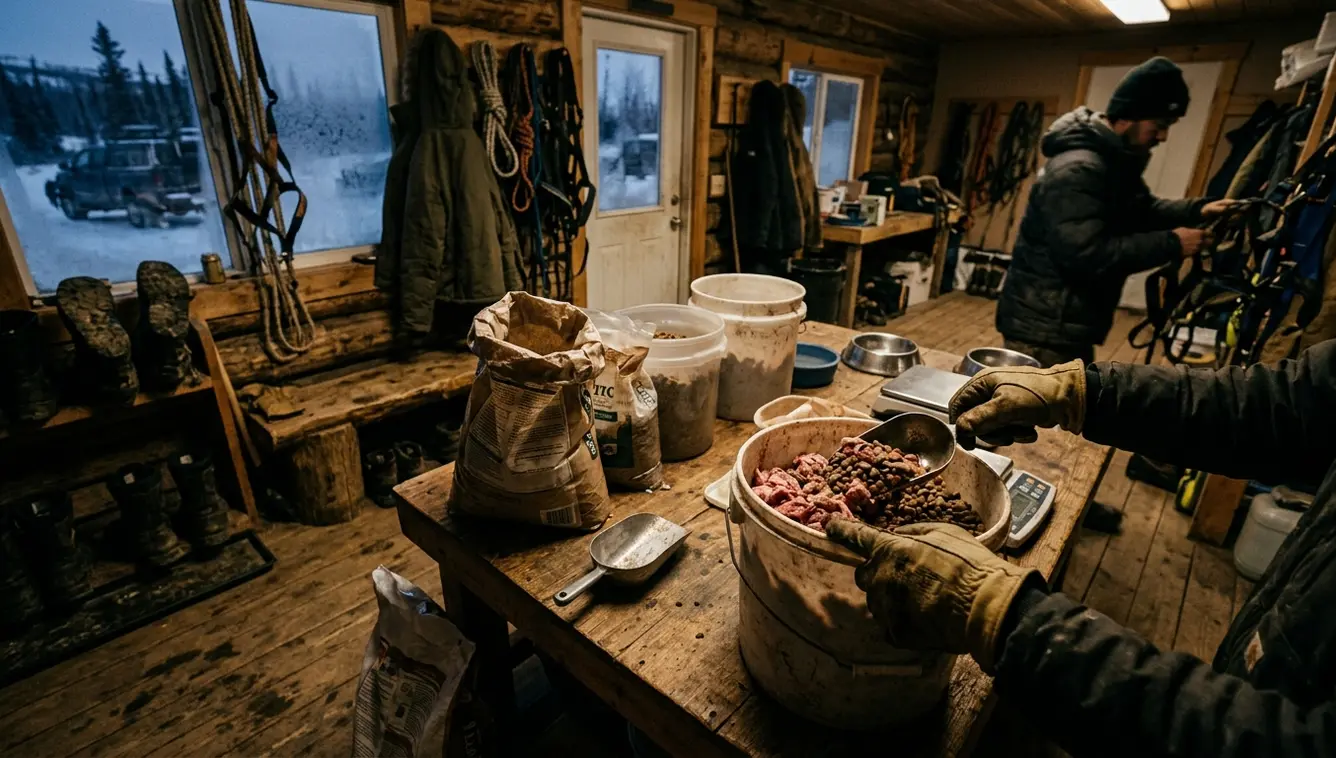
Assessing Energy Burn at the Gangline
The feeding decision begins at the gangline, long before you reach for the scoop. A working dog's engine runs entirely on the fuel provided in the bowl. Underfeeding directly compromises the safety of the entire team, making proper nutrition the primary defense against cold stress and trail injuries. You evaluate the effectiveness of your feeding program by watching the dogs work.
Check attitude, gait, and tug-line tension during each planned stop. A dog that finishes a run with a taut tug line, settles into the snow without prolonged shivering, and remains eager to eat and drink is processing its ration effectively. You must repeat this visual assessment within ten to fifteen minutes of reaching camp. The wet New Brunswick cold strips heat much faster than a dry day at the exact same air temperature. This heat loss accelerates dangerously when belly fur and harness padding become soaked from breaking trail through heavy, wet snow.
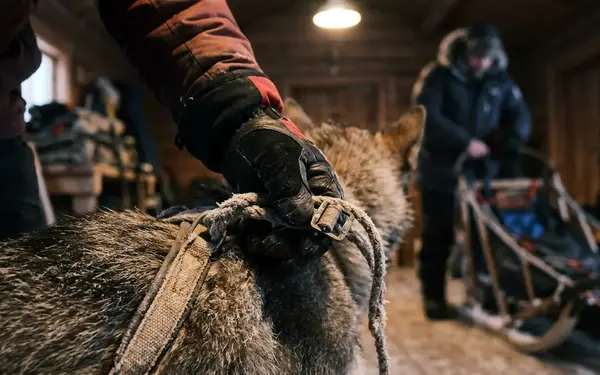
Visual checks alone fail to tell the whole story. A thick northern coat easily conceals rapid weight loss over the ribs and loin. You must assess the dog by hand through its winter coat. The ribs should be easy to find without feeling like sharp ridges, and the loin should retain its muscle mass rather than feeling newly hollow. A dog losing insulation or pulling power requires an immediate dietary intervention.
Physical Condition Monitoring
Record body weight on the exact same scale every three to seven days during heavy training. Consistent weigh-ins catch the subtle drops in body mass that a thick double coat hides from the eye.
Scaling Rations for Sub-Zero Workloads
You establish a winter ration by measuring the dog's intake during light work and adjusting upward as the environmental demands increase. Drawing on veterinary research on sled dog metabolic rates, the resting energy requirement can be estimated as 70 multiplied by body weight in kilograms raised to the 0.75 power. You use this mathematical result strictly as a baseline reference point. Trail rations must be adjusted from observed workload and physical condition rather than treating that initial calculation as the final allowance.
The combination of extreme cold and physical exertion multiplies a dog's resting metabolic rate. Calories spent maintaining core body temperature compete directly with the energy required for actively pulling weight. As mileage, sled load, wind exposure, and overnight cold increase, you must add food to the daily allowance. Daily appetite, stool quality, body weight, recovery speed, and enthusiasm in harness determine the size of the next adjustment.
A family team making short weekend loops has no reason to copy an expedition ration; dogs pulling for successive long days, sleeping outdoors, and recovering in sub-zero weather require specialized planning and sharply greater energy density. You review the ration after each three- to seven-day training block. Waiting until the end of a multiweek mileage build to adjust food volume guarantees a deficit that takes weeks to correct.
Compare different foods by reading the kilocalories per kilogram. You must weigh the served ration in grams. Cup measures become entirely unreliable when kibble size, density, or the volume of added meat changes from batch to batch.
Building the High-Fat Winter Bowl
The transition from a domestic diet to a working diet requires a massive shift toward fat and protein density. You assemble the diet around a complete working-dog food first. Premium commercial working kibble supplies the vital vitamin, mineral, and amino-acid framework that improvised meat feeding often misses. Read both the metabolizable-energy statement and the guaranteed analysis on the bag. Two foods with a similar scoop volume can provide materially different caloric totals.
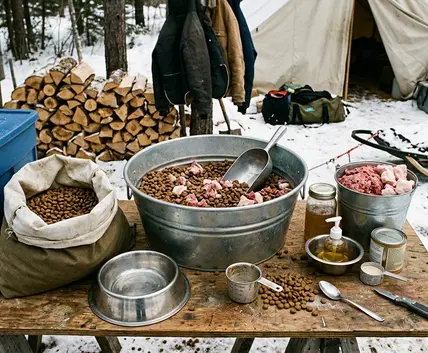
Once the nutritional baseline is established, you choose a more energy-dense formula and introduce measured animal-fat, meat, or fish additions. Fat supplies compact, slow-burning trail energy. Adequate high-quality protein supports muscle repair after long runs. Raw meat and fish have traditionally improved palatability and energy density in deep winter.
You must treat these raw additions as measured supplements rather than a nutritionally complete diet. Handle raw meat with dedicated utensils, keep it frozen during transport, and thaw it under strict control to prevent bacterial growth. Weigh the kibble and the supplements separately for seven to fourteen days when establishing a new ration. This isolation allows you to trace any changes in stool consistency, appetite, or body condition back to a specific ingredient amount.
Managing Fluid Intake When the Trail Freezes
Water planning is completed before departure because a frozen stream is never a usable watering point. Keeping dogs hydrated when natural water sources are locked in ice requires carrying the right equipment and scheduling frequent stops. You carry enough stove fuel and cookware to melt snow at camp, packing significantly more fuel than a human-only camp would require. Repeated batches of snow produce much less water than the original pot volume suggests, consuming massive amounts of heat in the phase change from ice to liquid.
You encourage drinking by preparing baited water. Stir a small amount of meat broth, soaked kibble, or finely chopped meat into warm water. The scent and flavor prompt the dogs to hydrate fully. Offer this baited water thirty to sixty minutes before departure so the dogs can drink and urinate before being put on the line.
Trail Hydration Schedule
- Offer baited water 30 to 60 minutes before harnessing.
- Use a starting trail interval of 90 to 120 minutes between water offers during sustained work.
- Provide an additional water offer immediately upon camp arrival.
- Serve the final hydration alongside the evening meal.
Prepare the water warm rather than steaming. You must test the temperature by hand before serving it to the team. Allowing dogs to eat snow on the trail consumes their internal body heat and consistently fails to provide a dependable volume of fluid for cellular function.
Pacing Meals and Trail Snacks
The day's food is divided precisely according to the dog's work cycle. You serve the substantial pre-run meal at least two to three hours before hard pulling. Feeding large meals immediately before intense exertion invites severe gastric issues. Stomach distension, vomiting, discomfort, and gastric dilatation-volvulus are urgent, life-threatening concerns on a remote trail.
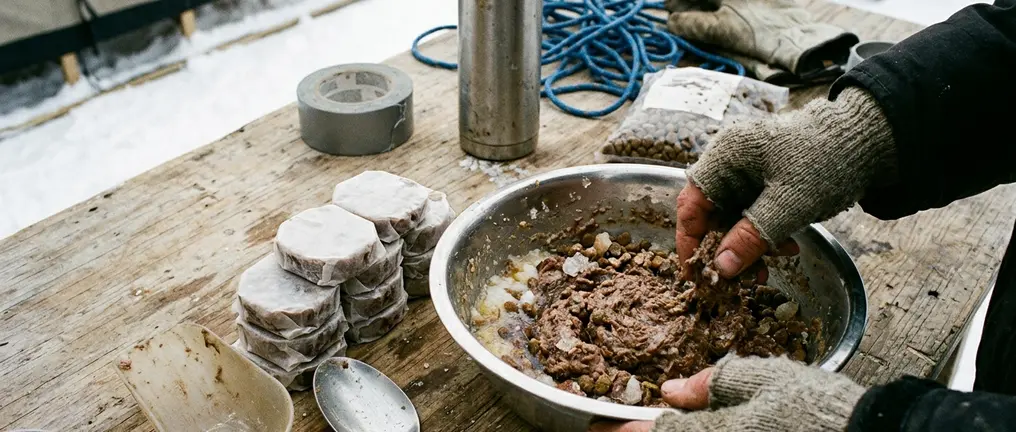
During a long run, you maintain energy levels without overloading the stomach by snacking the team. Offer small, pre-portioned pieces of frozen or chilled meat at planned breaks roughly ninety to one hundred and twenty minutes apart. These small chunks can be swallowed and digested easily while the dog remains in harness.
The evening camp routine prioritizes recovery. After reaching camp, you unharness the dogs, check their feet, offer water, and prepare their beds. Allow thirty to sixty minutes for their breathing and body temperature to settle completely before serving the main, warm, calorie-dense meal. You watch each dog finish the bowl. Catching a slow eater, a dropped meat chunk, or a sudden refusal to eat allows you to identify fatigue or illness before the next morning's run.
Phasing in the Heavy Winter Menu
Seasonal feeding changes as training volume rises. Sudden dietary changes on the trail lead directly to digestive distress, diarrhea, and a catastrophic loss of pulling energy. You begin the high-fat winter transition four to six weeks before the first heavy run.
Weigh each dog's off-season ration, then replace a small, measured amount of it with the new working kibble. Hold each incremental ration change for three to four days while recording stool consistency, appetite, body weight, and training recovery. Once the dog processes the new ratio perfectly for several days, you make the next increase. Introduce the working kibble entirely first.
Meat, fish, or added fat enters the bowl later as a separate measured component. You add one raw or cooked supplement at a time over the following seven to fourteen days. This phased approach allows you to identify exactly which addition causes a digestive upset. Freeze your trail-snack portions during the final week of preparation and test them during training runs. You need to confirm the serving size, thaw rate, and digestibility in the field before committing to a multi-day travel itinerary.
Winter Trail Feeding Check
- Record each dog's ration in grams and the food's kilocalories per kilogram.
- Palpate ribs, spine, and loin beneath the coat before each 3- to 7-day ration review.
- Pack pre-portioned trail snacks by dog or by feeding stop.
- Offer baited water at 90- to 120-minute intervals during the run.
Begin your team's high-fat winter transition four to six weeks before your first scheduled heavy run, with an initial replacement hovering around ten percent of the off-season ration using complete working kibble.






Write a Comment