
The Mid-Trail Shiver: Spotting the First Signs
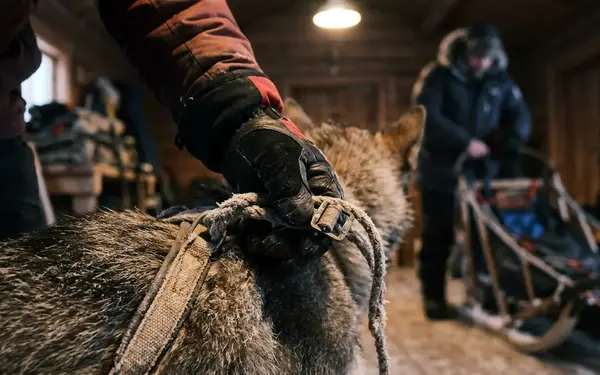
The dog team settles into an easy rhythm beneath the snow-laden spruce. Two adults have been walking the steeper sections of the New Brunswick trail, and both feel warm from the effort. Their child rides in the sled basket, tucked behind the driver and exposed to a steady stream of cold air.
At the next stop, the child who had been chatting ten minutes earlier gives a short answer and fumbles with a mitten. A shiver runs through their shoulders. The adults are comfortable, yet the least active passenger is already losing ground to the cold.
Children experience cold through a smaller body with less stored energy. Their comfort can change quickly, especially after sweating, sitting still, or entering an exposed clearing.
Warm Them Now
During each stop, check speech, alertness, shivering, hand use, and clothing at the neck or back. Quietness or clumsiness after a previously lively trail segment calls for immediate warming rather than encouragement to endure the ride to the cabin.
Why a Small Body Loses Heat Quickly
Body geometry explains why adult comfort makes a poor safety gauge. Surface area grows roughly with the square of body length, while mass grows roughly with the cube. A child therefore has more skin surface relative to the internal mass producing and holding heat.
Cold air can pull heat from that larger relative surface faster. The effect continues even when a child says little or appears content in the basket. A passenger also produces less muscular heat than the adults running beside the team.
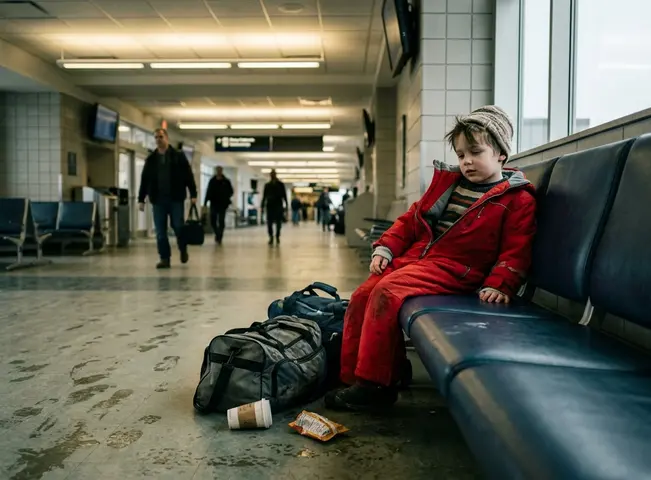
Small openings matter. Exposed cheeks, wrists, ankles, and the gap below a hat or helmet interrupt the insulating envelope. Airflow from a moving sled increases convective heat loss, even when the surrounding forest seems calm. Conditions can change again when the team leaves sheltered woods and crosses an open frozen clearing.
Shivering Spends a Child’s Limited Fuel
Shivering is an early attempt to compensate for heat loss. Rapid muscle contractions generate heat, while metabolism rises to support the work. I treat that response as a signal to act, never as evidence that the child can keep coping.
Children can have high metabolic rates, yet their smaller energy reserves may drain quickly during sustained exposure. Pediatric thermal regulation has no single field timetable. Damp clothing, continuous wind, limited food, and motionless riding can turn an energetic child lethargic within a trail segment hovering around ten minutes.
Watch the Progression
- Persistent shivering despite an added dry layer
- Fumbling with zippers or losing coordinated hand movement
- Slow answers, unusual irritability, stumbling, or marked drowsiness
- Reduced or absent shivering while cold exposure continues
The final signs in that sequence require urgent medical help. Begin controlled rewarming, shelter the child from wind, and end the exposure.
Build Child-Sized Layers Around Trapped Air
Shrinking an adult clothing system to a smaller size can leave a child with too little insulation. Smaller bodies need enough loft to hold warm, still air, particularly when the child will spend much of the ride seated.
- Start dry: Use a non-cotton next-to-skin layer. Check the neck and back after uphill walking because a child can become chilled once sweat cools.
- Protect the loft: Add fleece or wool insulation without compressing it. Flattened insulation traps less dead air around the body.
- Stop the airflow: Finish with a windproof shell. Close gaps at the wrists, neck, waist, and boot tops before the sled starts moving.
Test the complete system with the child seated. Bent knees and tucked arms can pull cuffs upward or compress layers that looked fine while standing.
Replace Damp Gear
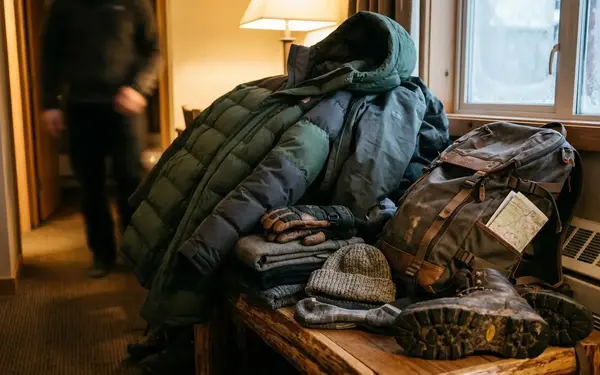
Keep spare mittens and socks in a sealed dry bag. At the next safe stop, replace wet items instead of covering them with more insulation. A dry outer layer cannot correct moisture trapped against the skin.
For a seated passenger, a lofted windproof sled bag can protect the legs and torso. Keep the face uncovered, preserve free breathing, and avoid tightening the bag enough to crush the clothing underneath.
Plan Stops for the Passenger in the Basket
Set the outing around the least active rider before the dogs leave the trailhead. Assign one adult to make direct checks so a quiet child does not disappear into the general work of handling the team.
A Practical Trail Rhythm
- Make the first comfort and clothing check after 10 to 15 minutes.
- During windy, damp, or very cold conditions, repeat checks at intervals no longer than 15 minutes.
- Offer food and fluid while the child remains alert and coordinated.
Choose high-calorie snacks that can be eaten without leaving mittens off for long. Carry a warm, rather than scalding, drink in an insulated container. Food supports the energy demands of thermoregulation, while a scheduled pause catches cooling before the child has to complain.
No fixed ride duration protects every child. Age, body size, wind, moisture, clothing fit, recent food intake, medical conditions, and whether the child is running or sitting all shift the practical limit.
Turn Back Early
If shivering continues after you add dry insulation and shelter the child from wind, end the exposure and begin controlled rewarming. Confusion, poor coordination, marked drowsiness, or fading shivering calls for urgent medical help.
A Warmer Ride Back to the Cabin
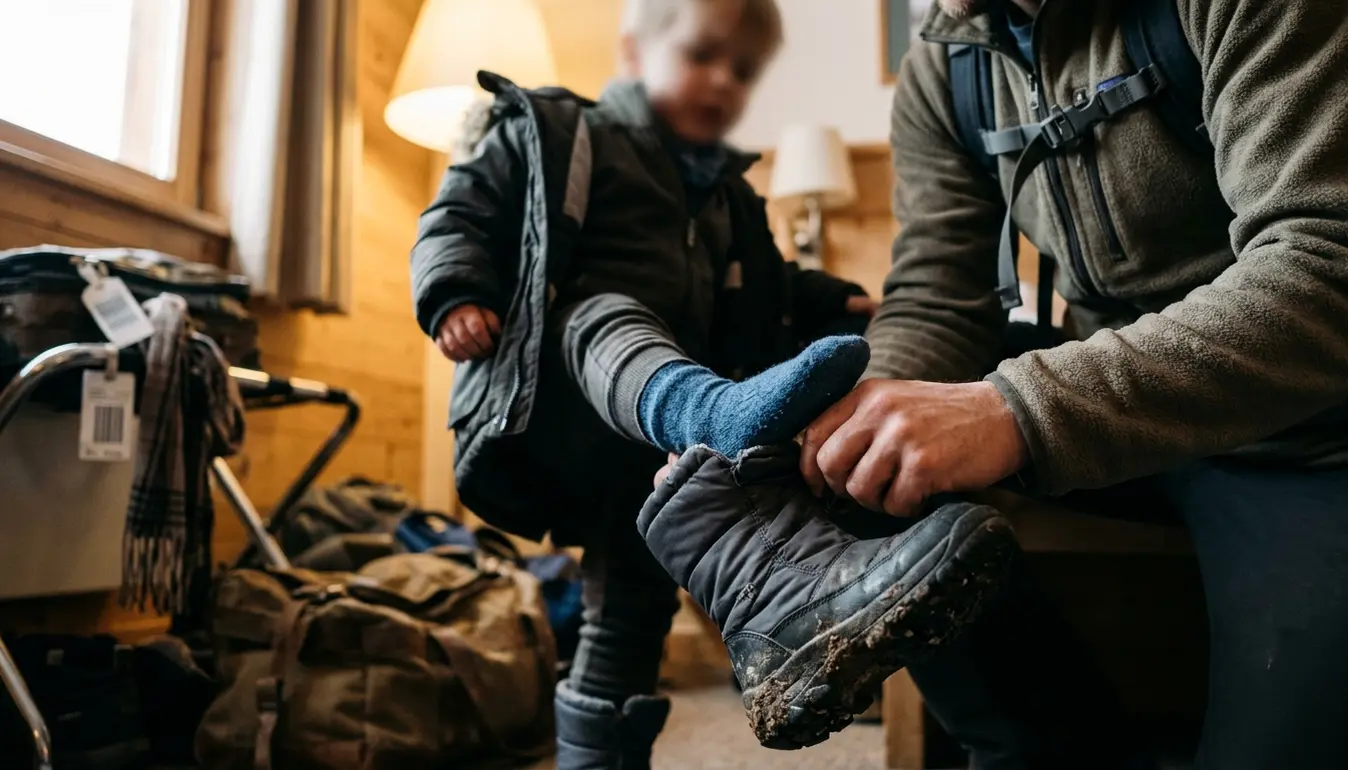
At the final trail stop, the family replaces the child’s damp mittens and checks the base layer at the neck. They settle the small passenger into a lofted, windproof sled bag, leaving the face clear, then pass over a thermos cup of warm broth.
The adult nearest the basket keeps the conversation going through the next ten-minute segment. The child answers normally, grips the cup without fumbling, and watches the lead dogs pick their way between the spruce.
Snow lifts behind the runners as the cabin roof appears through the trees. The child is still talking, the dry layers remain warm, and the team carries everyone through the last blue stretch of winter trail without another shiver.



Write a Comment