
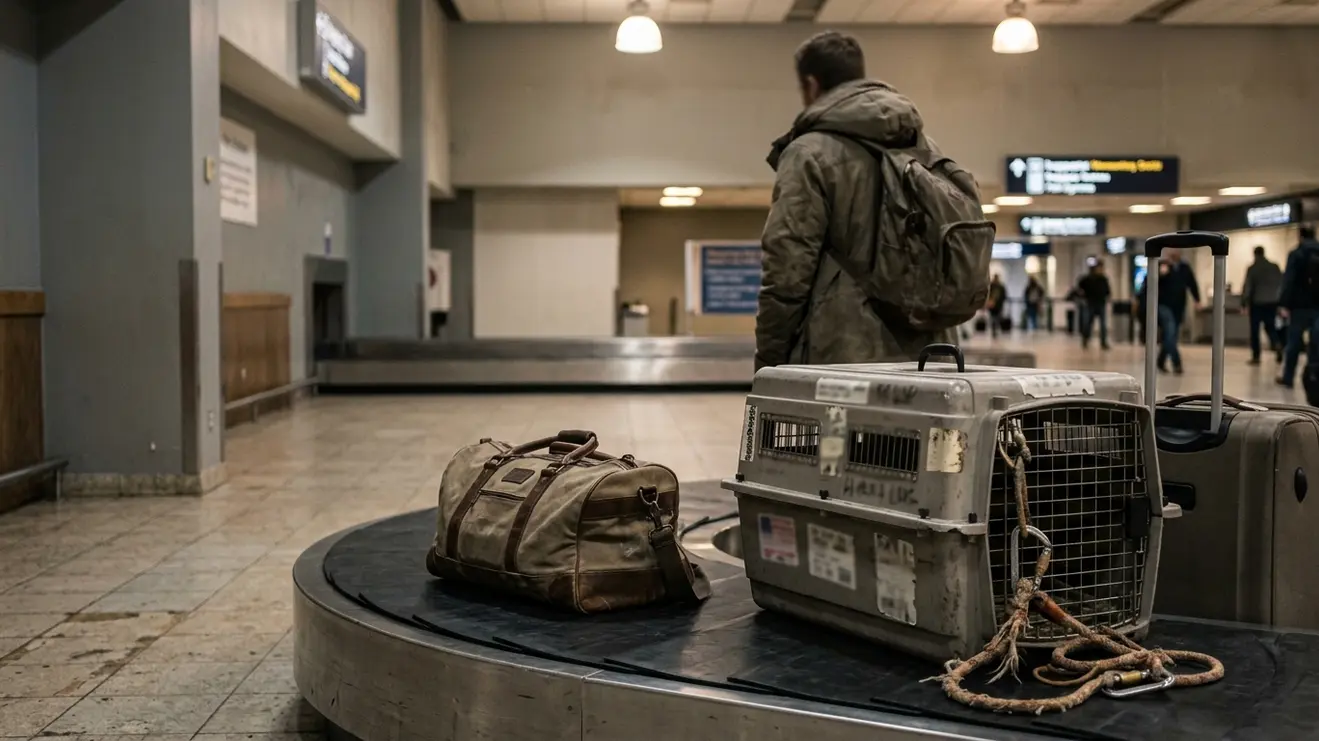
The Apprenticeship That Built Reliable Mushers
Traditional mushing preparation began in the kennel yard. A new handler fed dogs, cleaned housing, carried water, and watched experienced hands before taking responsibility for a team. Progress was measured in winter seasons and repeated chores, with the same person caring for the dogs before and after each run.
That sequence protected both dogs and drivers. Feeding and cleaning came first. Harness fitting and line management followed. Only then did the handler work with a small team under supervision.
Responsibility Sets the Pace
I organize the apprenticeship around what a person can reliably notice. Staying upright on the runners is a useful skill, but it says little about readiness. Can the handler spot a sore wrist during a pre-run check? Will they catch a loose neckline before hookup? Do they recognize when an eager dog suddenly hangs back?
Easy access to tours and equipment can make dog sledding look like a sport that begins at the trailhead. The real starting point sits beside the feed buckets and shovel. For a New Brunswick beginner, one complete cycle from freeze-up through spring breakup generally requires four to five months of work through changing snow, ice, temperature, and kennel conditions.
Earn Each Step
Follow the New Brunswick shovel-to-gangline progression: yard sanitation, thawed-feed preparation, paw and shoulder checks, harness inspection, supervised hookup, and finally limited driving.
What the Dog Yard Demands Every Day
The dogs set the daily order. Trail plans come after their immediate care.
- Inspect the yard, housing, water, bedding, and each dog's general behaviour.
- Refresh water and prepare feed using the kennel's individual feeding plan.
- Remove waste, replace damp bedding, and clear snow where dogs and handlers move.
- Check paws, wrists, shoulders, gait, appetite, hydration, and willingness to be handled.
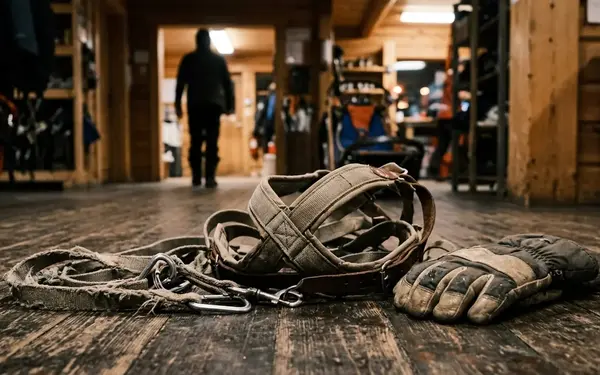
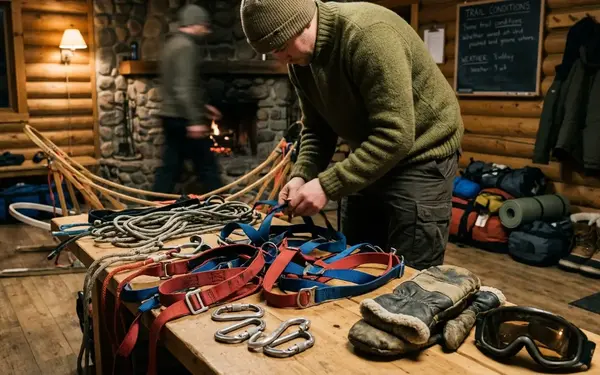
- Inspect harnesses, necklines, gangline hardware, sled components, and drying gear.
- Consider a training run only after the care work is complete.
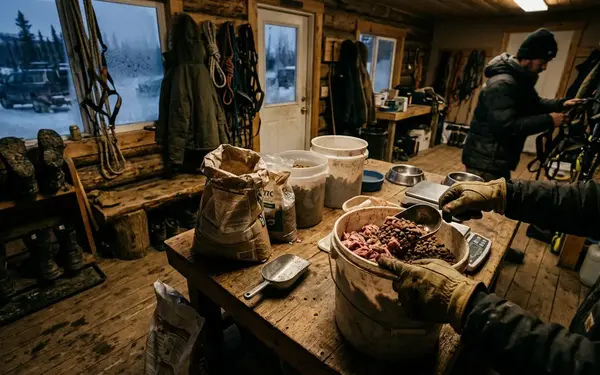
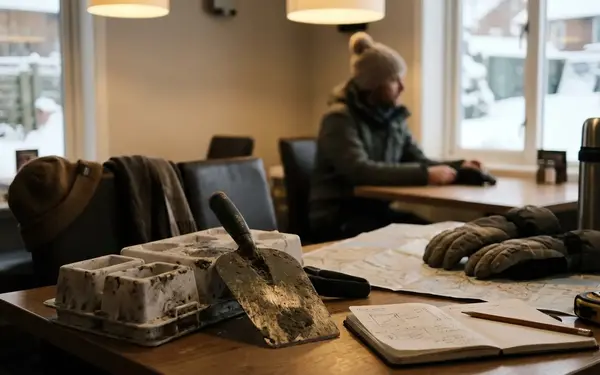
Frozen meat deserves deliberate handling. Controlled thawing makes portioning safer than forcing a blade through a rock-hard block. Knives, preparation surfaces, containers, and leftovers need the same sanitation discipline used with other raw animal feed.
The Work Continues After the Run
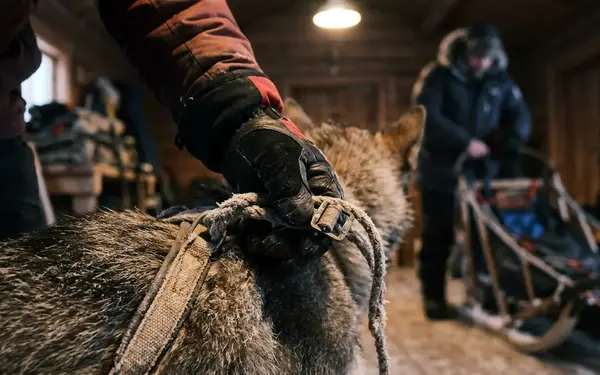
Back in the yard, I remove harnesses one dog at a time. Each dog receives another foot, wrist, and shoulder check. Water and feed follow the established kennel routine, while damp harnesses and lines go somewhere they can dry before refreezing. A useful condition check happens at least twice on a running day: before harnessing and after unharnessing.
My handling experience reflects the heavy snowfall, wet cold, and humidity of New Brunswick winters. Snow management and drying routines vary elsewhere, although the physical obligations of feeding, cleaning, inspection, and repair remain.
This work teaches judgement that trail time alone cannot supply. A frayed tug line, a tender paw, or a dog eating less than usual may look minor. In the yard, you learn when to pause, investigate, and change the plan.
Trust Starts Long Before the Gangline Tightens
Sled dogs run for a musher they know and trust. That relationship grows through ordinary contact: bringing food on time, approaching calmly, handling feet with care, and keeping routines predictable.
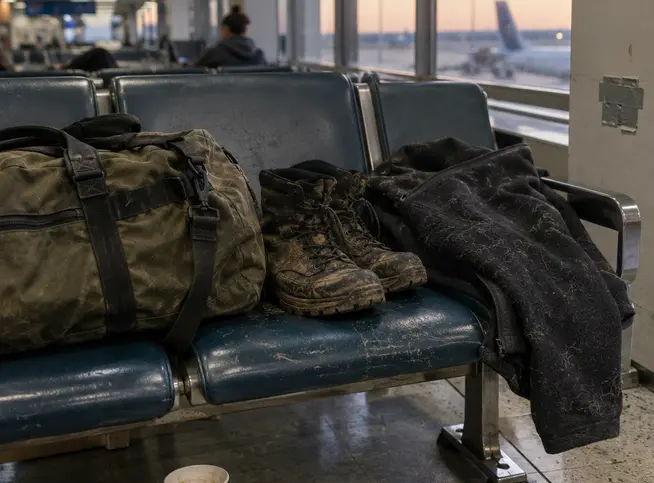
Several weeks of consistent feeding, cleaning, turnout, and harnessing should come before expecting even a short supervised drive with a small, experienced team. During that time, individual personalities become clear. One dog crowds the gate. Another waits at the edge of the group. Certain pairs stand quietly together, while others need more space during hookup.
Read the Dog Before Harnessing
Body language offers an early check on readiness. Weight shifted away from the handler, repeated lip licking, a tucked tail, pinned ears, or refusal to present for harnessing should prompt a closer look. Forcing the routine can turn uncertainty into fear and place the entire team under avoidable strain.
Driving clinics have value. They can teach braking, cornering, anchoring, and sled balance in a controlled setting. Those mechanical skills remain incomplete when the driver cannot read the team or handle each dog calmly. A familiar, trusted handler can solve a hesitant hookup before it becomes a tangled line or a loose dog.
The goal is quiet cooperation. By the time a volunteer reaches the runners, the dogs should already recognize their voice, touch, and habits.
Choosing a Kennel Where Care Comes First
Approach an established kennel with a specific offer. Contact the owner two to four weeks before the regular snow-training period, state which days you can attend, and confirm that you have reliable transportation in winter weather. Mention relevant dog-handling or outdoor experience plainly, then volunteer for the work the kennel actually needs.
Make Your First Visit an Observation Shift
Watch how the dogs respond when someone enters the yard. Look for accessible water, dry resting areas, secure and maintained housing, prompt waste removal, and collars or harnesses that fit correctly. Staff should know individual feeding needs and should be able to examine dogs without routine intimidation.
Ask direct questions about daily care, injury checks, training methods, retirement plans, and what happens when trails are unusable. Transparent answers matter. So does the condition of the yard in front of you.
- Offer a repeatable half-day or full-day shift instead of occasional help.
- Arrive ready for cleaning, bucket washing, food preparation, and snow removal.
- Follow instructions around gates, loose dogs, tools, and feeding order.
- Observe hookups without stepping into the line unless invited.
- Keep notes on dog names, harness fit, routines, and questions for a quiet moment.
During the first four to eight shifts, expect yard cleaning, bowl washing, bedding replacement, harness organization, gear work, and observation. That arrangement helps the kennel while giving you a grounded view of family adventures and expedition routines alike. Driving the main string should sit well beyond the first-season expectation.
Serve a Full Winter Before Buying a Team
The revealing days arrive during wet thaws, wind-packed snowfall, and dark evenings when the winter trails cannot be used. Every dog still needs clean quarters, water, food, inspection, and calm handling. Those shifts show whether the daily responsibility remains satisfying after the novelty fades.
The Freeze-Up Rule
Before accepting responsibility for dogs or buying gear, a prospective musher should be able to reset the yard, prepare feed, fit and inspect a harness, identify common rub points, handle a loose dog safely, and complete post-run checks without skipping steps.
Use one firm boundary: complete a full operational New Brunswick winter as a kennel volunteer, from the first sustained frozen conditions through spring breakup. That usually means a four-to-five-month commitment through wet cold, heavy snow, refreezing equipment, and weeks when care continues without a run.
Do not buy a sled, a harness set, or a dog before completing that full season. Put your hands on the shovel first, earn the kennel's trust, and reach for the gangline only after the yard has tested your commitment.

Write a Comment