
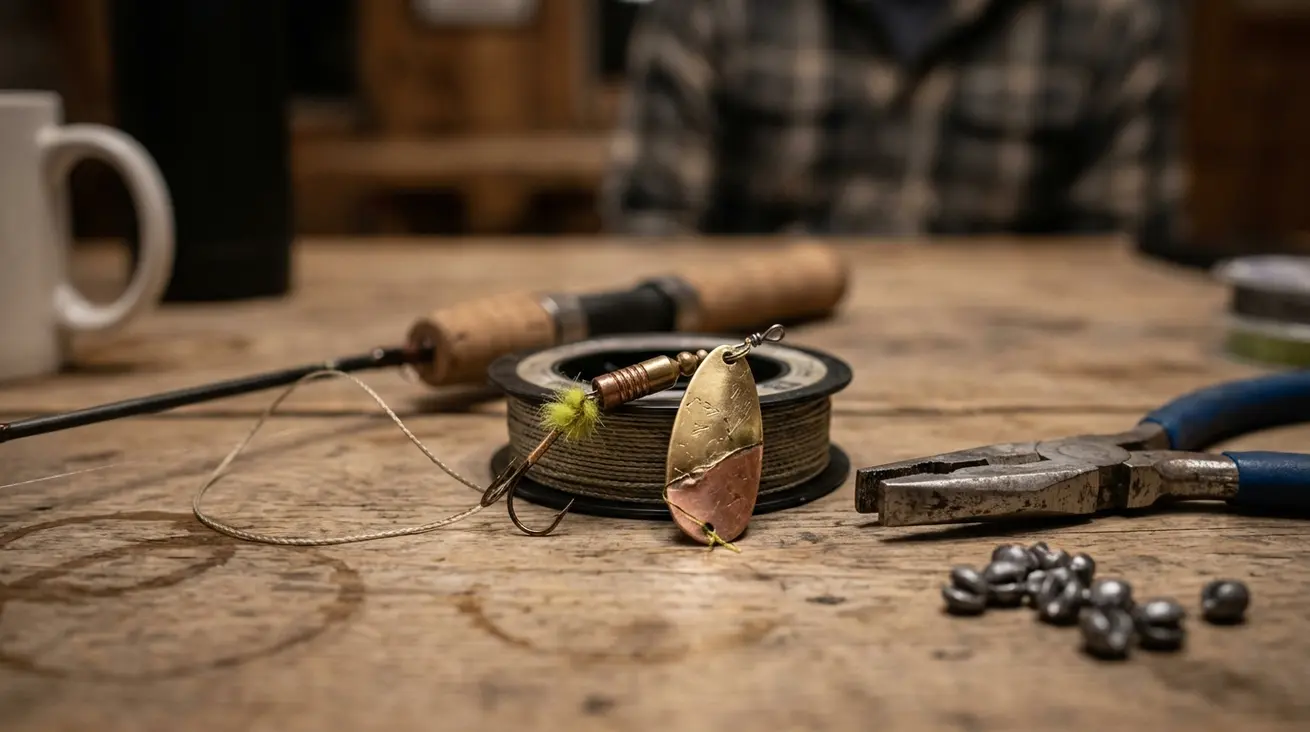
Ice fishing in Acadia starts before the auger touches ice. The angler who reads wind, snow, current, and access usually makes better decisions than the angler who buys the heaviest sled first.
On the Acadian Peninsula and across New Brunswick’s freshwater winter routes, two places can look identical from the road and behave nothing alike underfoot. A sheltered pond behind spruce cover may build clear ice after a cold run. A nearby river channel can carry hidden current, brackish influence, or spring seepage that weakens the sheet from below. Gear matters, but exposure decides the trip.
Table of Contents
- Understanding Acadian Winter Ice Conditions
- Essential Safety Protocols and Ice Thickness
- Selecting the Right Gear for Hardwater Fishing
- Step-by-Step: Setting Up Your First Ice Hole
- Techniques for Catching Winter Species in Acadia
- Environmental Limitations and Local Regulations
Understanding Acadian Winter Ice Conditions
Read Acadia as a maritime ice environment
The common mistake is treating every frozen lake like an inland shield lake. Acadian winter ice sits in a more variable maritime pattern, where wind shifts, wet snow, daytime softening, and nearby tidal or river influence can change the practical route. A sheltered kettle lake behind spruce cover may build usable ice while an exposed bay still flexes, cracks, or carries weak snow ice near shore.
A sheltered pond and a nearby river channel can show the same snow cover but have completely different load strength because current, springs, and brackish influence attack ice from below.
How the first sheet forms
Carry the beginner safety kit where it works
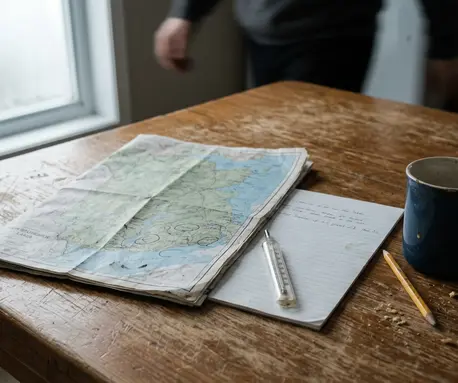
On many New Brunswick freshwater lakes, first reliable freeze-up usually gets assessed after repeated overnight lows below roughly -8 C to -12 C, followed by daytime temperatures that do not erase the new ice. The first safe-looking surfaces often form in shallow coves, lee shorelines, and protected ponds. River mouths, narrows, culverts, springs, and tidal-influenced water can stay unsafe after nearby bays appear locked in.
Snow complicates the read. A fresh snowfall of 10-15 cm can slow ice growth because the snow insulates the surface. It also hides weak patches, pressure cracks, and old auger holes, which turns a simple shoreline check into a more deliberate route assessment.
Bottom Line: Buy gear after choosing the type of water you can safely assess. A beginner on foot belongs on sheltered freshwater with clear access, local confirmation, and no obvious current features.
Essential Safety Protocols and Ice Thickness
Judge ice by material, not just depth
Clear blue or black ice gives the best reference point for basic field decisions. White ice is not automatically unsafe, but it should not be treated like the same thickness of clear blue ice; layered slush ice can support weight unevenly. Snow-covered ice deserves extra suspicion because the surface hides the exact cues a beginner needs most.
Common Canadian field guidance treats roughly 10 cm of clear, solid ice as a minimum for one person on foot. Thicker ice is required for groups, machines, or loaded sleds. The Canadian Red Cross publishes practical guidelines for ice safety and thickness, but a printed threshold never replaces testing on the actual route.
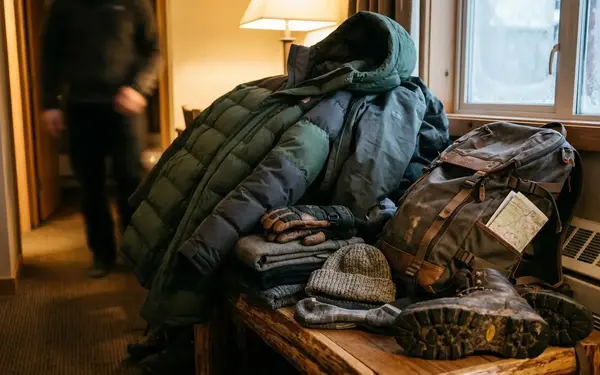
Ice awls belong outside the jacket, not buried in a pocket under layers. A flotation suit or approved flotation outerwear gives the beginner a margin when cold shock would otherwise steal coordination. Add a spud bar, a throw rope in the ballpark of 15-20 m, whistle, headlamp, waterproof phone pouch, and dry mitts sealed in a bag.
The kit should not ride loose at the bottom of a sled. The angler who breaks through needs tools on the body or within arm’s reach.
Test the route in stages
From reader feedback, the safety decision starts from shore, continues at the first step-on point, and repeats every time the route changes. Use a spud bar every 2-3 careful steps when leaving shore on unfamiliar ice, especially in the first 20-30 m where springs, cattail edges, rocks, and inflow can weaken the sheet. Drill or chisel test holes at intervals of roughly 10-15 m on a new route instead of trusting one measurement near shore.
Important: If the spud bar punches through with one firm strike, if water floods through snow, or if cracks run toward current, turn around. The fish will still be there after a colder week.
Selecting the Right Gear for Hardwater Fishing
Choose for hole count and walking distance
Beginners often overbuy cutting power and underbuy safety. A power auger can make a beginner less safe if it encourages drilling far from the access point before the walking route has been tested. For a first freshwater setup, the better alternative is usually a lighter kit that keeps the angler close to confirmed ice and reduces fatigue on the walk back.
A hand auger hovering around 6 inches suits many beginner setups for smelt, perch-sized fish, and stocked trout. An 8-inch hole gives more room for larger trout, but it takes noticeably more effort by hand. That trade-off matters when wind rises and the shelter needs to come down quickly.
Use short rods for short winter work
Standard open-water rods feel awkward over a small hole, especially inside a shelter. Ice rods commonly run 24-36 inches long, which keeps the angler close to the hole and makes light bites easier to see. The short blank also helps keep the line vertical when bait needs to sit 30-60 cm off bottom.
A skimmer looks minor until the hole starts freezing over. A metal scoop is preferable in very cold weather because plastic scoops can become brittle when repeatedly knocked against the ice rim.
Let tip-ups do quiet work
Tip-ups help a beginner manage passive bait while jigging one active rod. They can cover slightly different depths or edges without forcing constant rod handling. The catch is regulatory: the number allowed and the attendance distance must be checked against New Brunswick winter angling rules for the specific waterbody.
Field Note: For a first outing, one jigging rod and one legal tip-up often teach more than a crowded spread. Fewer holes mean better attention to safety, bite detection, and ice changes.
Step-by-Step: Setting Up Your First Ice Hole
1. Pick a clean working pad
Choose a flat spot away from visible cracks, wet slush, old hole clusters, and pressure ridges. Clear a working pad roughly 1-1.5 m wide before drilling so boots, sled runners, and shelter anchors are not sitting on loose snow. Exposing the surface also makes cracks, cloudy patches, and refrozen scars easier to inspect.
2. Drill with control, not force
Set the auger vertical and let the blades cut. If the ice is thick enough to tire the shoulders, use short pauses every 20-30 turns rather than leaning hard and wobbling the shaft. A vertical cut prevents an oval hole that catches transducers, skimmers, and fish at the rim.
The last few turns matter. Ease through the breakthrough so the auger does not slam downward and throw slush across the pad.
3. Clear the hole completely
After breakthrough, scoop slush until open water shows across the full diameter of the hole. Leave a small downwind slush pile only if it will not refreeze around the line or create a tripping ridge beside the shelter door. Keep the skimmer where it will not freeze into the pile.
4. Sound bottom before setting bait
Drop a depth weight or baited jig until it touches bottom. Then reel up 30-60 cm for trout cruising near bottom, or adjust higher if fish appear suspended. This one step prevents the classic beginner problem: fishing confidently at the wrong depth for an hour.
5. Set shelter with an exit plan
If using a pop-up shelter, place the door leeward and anchor the windward corners first. Bank only a light skirt of snow around the base so the shelter can still be removed quickly if wind or ice conditions change. Comfort should never trap the angler in a slow teardown.
Techniques for Catching Winter Species in Acadia
Start subtle in clear cold water
Winter fish often punish overactive hands. In cold, clear water, begin with 3-5 short lifts of 5-10 cm, then pause for 5-15 seconds while watching the rod tip for a tap or slack-line bite. Controlled drops matter because a lure that falls naturally often draws the actual strike.
If nothing responds, change one variable at a time: depth, lure size, bait size, or cadence. Do not turn the hole into a constant snapping routine unless fish show they want that speed.
Rig tip-ups with purpose
For trout, set one bait 30-60 cm off bottom and another higher in the water column if rules allow multiple lines. Trout often cruise rather than hold tight to one spot in winter, so a higher set can intercept fish that never drop to the bottom bait. For smelt-style setups where permitted, small hooks, light line, and tiny bait pieces usually work better than bulky bait that spins unnaturally under the ice.
Check tip-up holes often enough to keep them from skinning over in freezing wind. A thin ice lid can stop the spool or make a flag trip late.
Handle fish before cold damages them
Freezing air turns slow handling into a welfare problem. Wet hands or rubberized gloves protect the fish’s surface better than dry wool. Keep release fish off dry snow, remove the hook quickly, and make the keep-or-release decision fast when air temperatures sit well below freezing.
Bottom Line: In Acadian winter water, the first productive pattern is usually quiet: small bait, short lifts, long pauses, and close attention to the rod tip.
Environmental Limitations and Local Regulations
Confirm the legal waterbody, method, and date
The final decision before a trip is regulatory and environmental, not recreational. Check the provincial angling summary before each trip and again when changing waterbodies, because winter openings, bait rules, line limits, and possession limits are not uniform across New Brunswick. A method that fits one lake can be closed or restricted on another.
Tip-ups deserve special attention. A beginner must confirm the number of lines allowed, whether bait is permitted, and how close the angler must remain to the gear.
Pack out what thaw will expose
Leave no trace on ice means thinking about spring water, not just winter appearance. Remove all bait packaging, line clippings, propane canisters, food waste, broken skimmer pieces, and shelter anchors. Frozen trash often appears during thaw and can move directly into shoreline habitat.
Backfill or clearly avoid large holes where practical, especially near access routes used by families, dog teams, snowshoers, or skiers. An ice-fishing site should not become a hazard for the next trail user.
Beginner Ice-Fishing Go/No-Go Checklist
- Confirmed the chosen New Brunswick waterbody is open for the date, species, bait, and gear being used.
- Checked recent local ice reports, weather, wind, and daytime thaw forecast before leaving.
- Packed ice awls on the body, flotation outerwear, spud bar, throw rope, whistle, headlamp, waterproof phone pouch, and dry mitts.
- Planned a short walking route with test holes at intervals rather than one long push from shore.
- Chose a sheltered freshwater location, not tidal sea ice or a river section with current.
- Set a turnaround rule for weak ice, rising wind, wet snow, or changing visibility.
- Packed a waste bag for bait packaging, line clippings, food waste, and damaged gear.
Important: General ice-thickness guidance is secondary to local advisories, posted closures, conservation officer direction, and conditions observed on the ice that day.
This starter guidance stays with sheltered freshwater foot travel. It does not cover tidal sea ice, commercial smelt camps, or machine travel on rivers with current. For a first Acadian ice-fishing day, that narrower scope is a strength: shorter routes, fewer holes, cleaner decisions, and a better chance of coming home eager for the next cold morning.


Write a Comment