
A Half-Day Run Gives First-Time Riders Room to Learn
A half-day dog sledding tour is the smartest starting point for a first visit to New Brunswick’s winter trails. It brings the dogs, the forest and the challenge of driving into a manageable introduction, with time to discover how boots, balance and clothing perform under real effort.
The appeal of an overnight expedition is easy to understand: spruce branches holding fresh snow, a trail disappearing into the woods, camp waiting beyond the next bend. Yet an authentic introduction begins with understanding the team and controlling the sled. An overnight journey adds camp chores, sleeping-system management and dog-care responsibilities after the travelling ends.
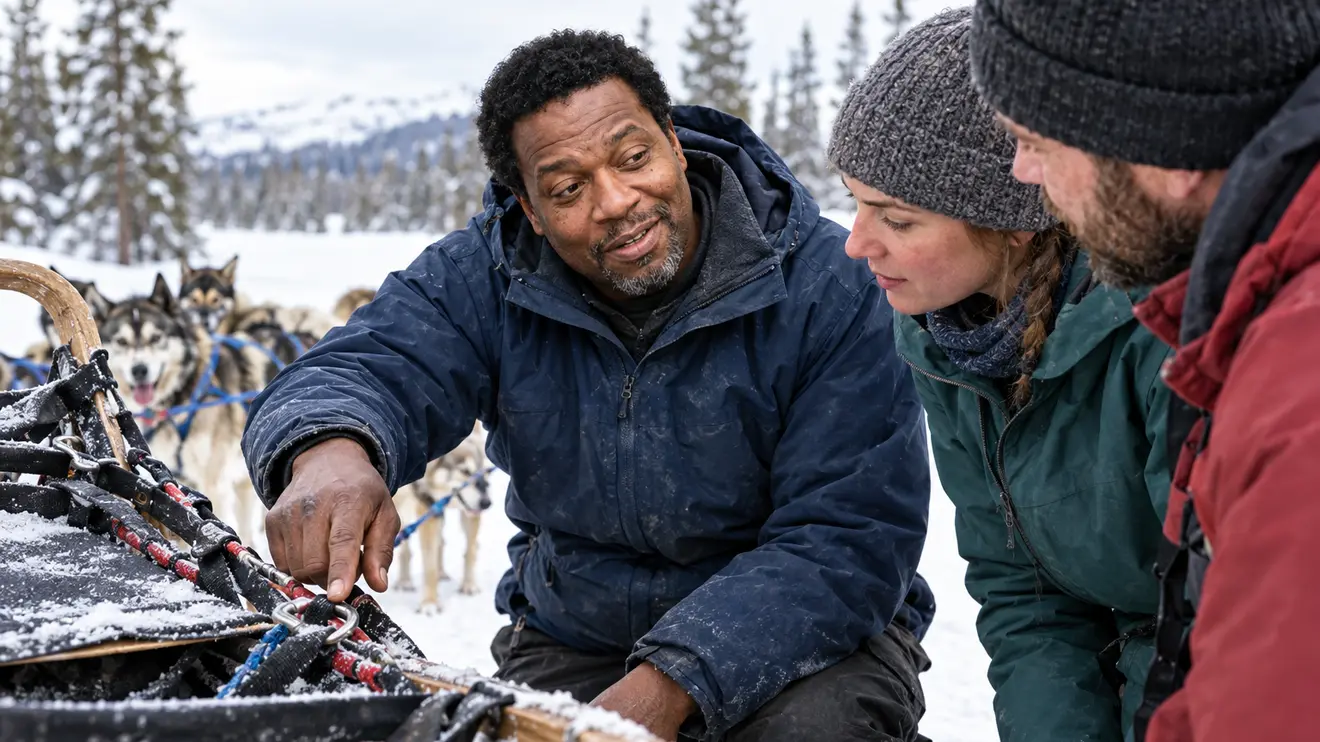
Consider a family arriving beside an Acadian forest trail expecting something close to a sleigh ride. A seated passenger can settle into insulation; a participant driving a sled must stay engaged. The driver bends their knees over uneven snow, shifts weight through corners and adjusts clothing as effort rises. Even getting comfortable on the runners takes attention.
That difference makes the introductory format valuable. A typical sequence moves through clothing checks, a safety briefing, equipment demonstrations, supervised practice and a guided run. Briefing, harnessing and stops occupy part of the booking window, so travellers should check the itinerary for the actual balance of instruction and trail travel.
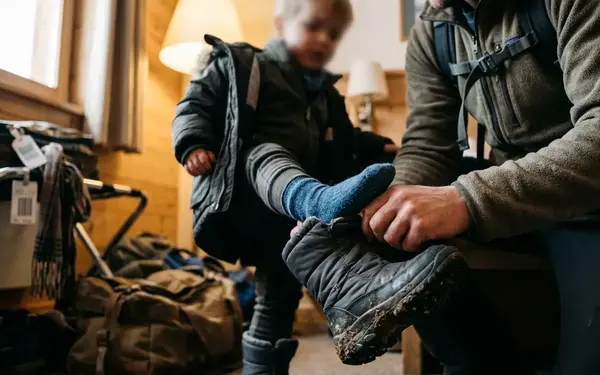
Boots Before Departure
During the equipment check, the rider’s boots should sit securely on the runners, gloves should allow reliable control, and clothing should permit knee and hip movement. A painful boot cuff or restricted stance deserves adjustment at the start. Comfort supports attention when the trail begins asking more of the driver.
Runner Balance and Climbing Turn Cold Travel Into Exercise
Driving a sled involves sustained, changing effort. Narrow runner surfaces demand stable footing, while slightly flexed knees and hips absorb the chatter of packed snow. A rigid stance sends each jolt through the body and makes balance corrections harder. Through bends, deliberate weight shifts help the sled follow the trail.
On an uphill stretch in the Miramichi highlands, a guide may ask the driver to kick alongside the sled or help push. That assistance raises breathing and heat production quickly. When the trail levels out, exertion drops, yet moisture remains inside the clothing. Damp layers then make staying warm harder.
Vent Before the Climb
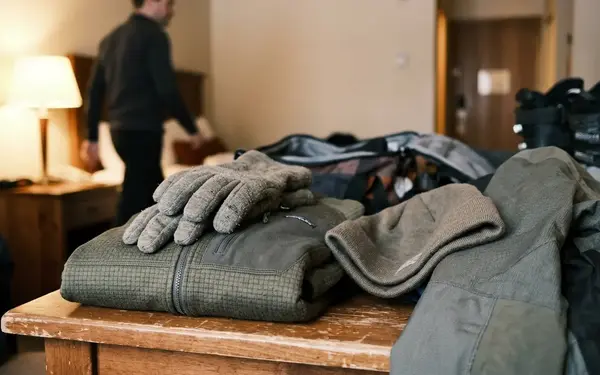
A common response to winter weather is to keep every zip closed throughout the outing. A better approach matches ventilation to effort: open suitable vents before a hard push, then restore insulation as activity eases or the team stops. Keeping spare insulation accessible makes that adjustment easier. The rider should discuss clothing changes with the guide while the sled is safely controlled.
Fatigue becomes a safety concern when it changes movement. Locked knees, repeated wobbles, missed instructions and late braking deserve attention whenever they appear. On a descent, delayed braking can allow the sled to close on the rear dogs and slack to develop near their legs. A tired rider may also shift weight too late through a banked corner.
Persistent shivering, numbness, confusion or worsening coordination call for a stop and the emergency plan. Another strenuous push adds work to an already deteriorating situation.
Smooth Braking Helps the Dogs Keep Their Rhythm
The dogs experience the driver’s decisions through changes in resistance and line tension. Harnesses and tuglines connect their effort to the gangline and sled. Abrupt braking, an uneven load or repeated surges alter the work reaching each dog, whether the team includes Alaskan huskies, Siberian huskies or other trained sled dogs.
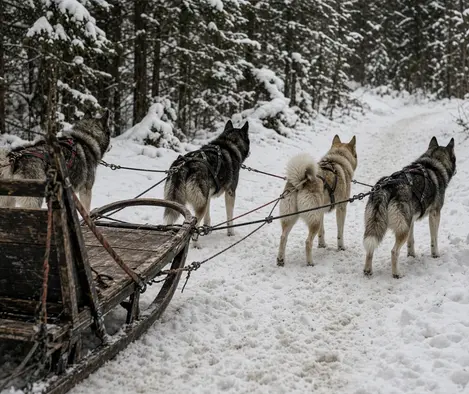
The drag mat illustrates the balance involved. Nervous beginners sometimes keep pressure on it throughout a flat stretch, adding resistance when the guide has asked for freer travel. Controlled drag remains useful for managing speed and keeping appropriate line tension. The skill lies in applying the amount the terrain, team and guide require.
Climbing presents the opposite challenge. A driver who stays planted while the dogs pull uphill contributes no assistance. Kicking or pushing when directed can ease their load, provided the rider maintains control and follows the demonstrated technique. Smooth, coordinated help gives the team a more consistent task.
Watch Gait and Harnesses
Dog welfare also requires observation. Uneven steps, repeated attempts to stop, harness rubbing, paw discomfort or unusual breathing warrant assessment by the guide. A hesitation alone says little about a dog’s emotional state. Handlers consider movement, effort, footing and recovery together, then adjust the pace or stop as needed.
For the beginner, the practical priority is steady handling: predictable braking, controlled spacing and prompt responses to instructions. Those habits support both the driver’s safety and the dogs’ workload.
Overnight Readiness Shows Up in Repeatable Trail Skills
Finishing the introductory route provides a useful starting point for assessment. Progression becomes sensible when control and personal warmth remain dependable, including during stops and after exertion. The following checks give a traveller concrete subjects to discuss with the guide before choosing an overnight itinerary.
- Descent control: The rider anticipates changes in slope, uses the demonstrated braking technique and maintains safe spacing behind the wheel dogs, the pair nearest the sled.
- Consistent line management: Braking and weight shifts stay smooth across repeated corners and descents, with prompt responses to instructions.
- Supervised securing: The rider understands snow-hook placement in suitable snow and follows the guide’s procedure for keeping the team controlled, including guarding against a hook pulling free.
- Moisture management: The rider notices overheating early, adjusts layers, retains useful hand function and keeps dry insulation accessible. Chemical warmers can support a sensible clothing plan.
- Dog-care participation: Once handlers secure the team and give permission, the rider follows harness instructions and flags paw snow buildup, rubbing or altered movement.
- Camp capability: The traveller can handle equipment with bulky gloves, protect sleeping insulation and complete assigned chores while maintaining personal warmth.
Repeated braking errors or unresolved cold discomfort call for more preparation before adding a night outdoors. A further supervised outing offers another opportunity to practise while keeping the commitment manageable.
The overnight decision also includes the dogs’ recovery needs. Working sled dogs produce enough body heat to overheat even when the air is below freezing.


Write a Comment