

Why Northern New Brunswick Belongs Above a Resort on Your List
For travelers who prize sustained movement through winter forest over lift-served vertical, northern New Brunswick can be eastern North America’s most rewarding winter choice. Its appeal lies outside the commercial resort circuit: rolling uplands, forest trails and an inland-to-coastal journey that gives each day a different character.
Keep the geography straight when planning. Edmundston sits in the inland northwest; Bathurst faces the Bay of Chaleur. Between them, the northern Appalachian landscape supplies the climbs, descents and long traverses that make this corner of New Brunswick travel worth slowing down for.
Mount Carleton reaches 820 metres above sea level. That establishes the scale of these uplands, but summit elevation tells a snowshoer or musher little about the effort ahead. Route distance, accumulated climbing and surface condition matter more.
Travelers seeking long downhill runs may prefer a lift-served mountain. For dog sledding, snowshoeing and backcountry touring, undulating terrain offers another reward: enough changing ground to make the journey itself the attraction. Build the trip around confirmed trail conditions rather than assuming deep snow across the whole region.
Choosing Sled Trails Around Kedgwick and the Northern Uplands
A white line on a map can conceal several different uses. A snowmobile corridor, a park recreation trail and a dedicated musher route each require separate checks. Start with permission and designated use, then examine the packed base, turns, descents and likely encounters with other travelers.
Supportive packed snow makes the difference for a sled team. Deep, unconsolidated powder increases pulling effort. Forest shelter can reduce wind exposure, but canopy alone tells a guide little about working temperatures or runner conditions. Around Kedgwick and the Appalachian uplands, hardwood and conifer stands provide varied surroundings; reserve descriptions such as “old-growth” for a verified route.
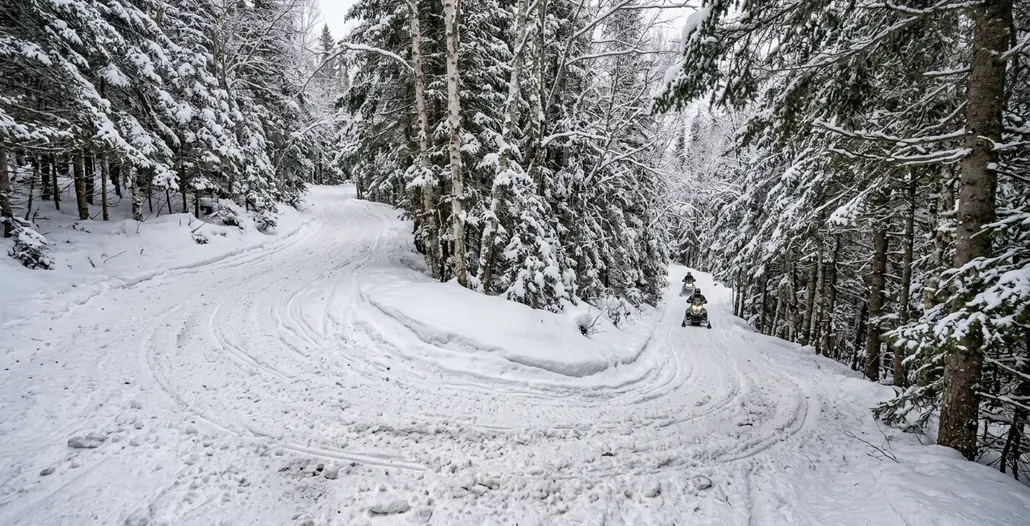
On quiet stretches, attention settles on the dogs and the sound of runners. Shared corridors bring a different rhythm, with encounters to manage. Wildlife sightings remain a possibility rather than a scheduled attraction.
Keep the Sled
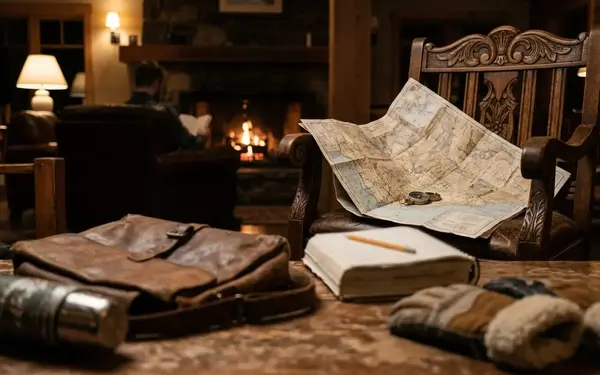
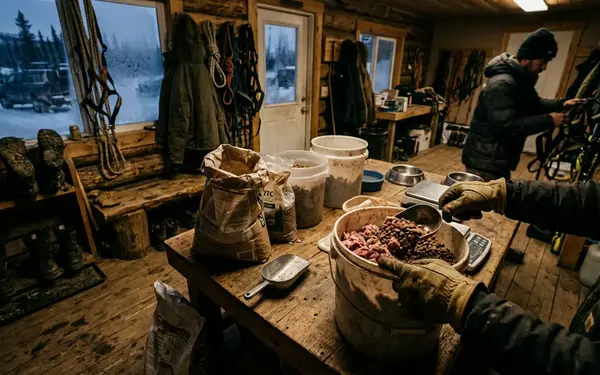
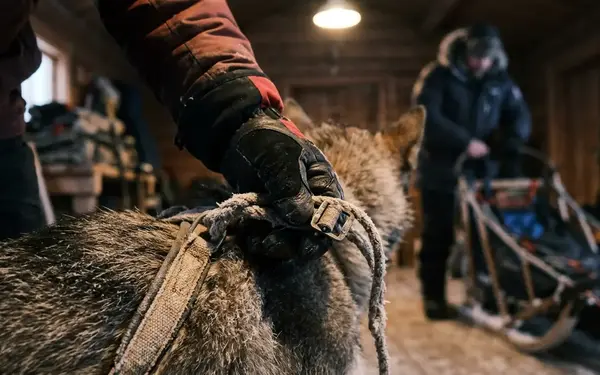
Before departure, the guide should explain braking, spacing between teams, leaning through turns and the instruction never to release the sled. Download the route and carry a map and compass. Mark forestry-road junctions explicitly and establish an emergency communication plan that works beyond cell coverage.
From Madawaska Ployes to Acadian Fricot
Start the food journey around Edmundston, where Brayon identity and Madawaska’s buckwheat ployes belong together. Commonly cooked on one side without flipping, ployes can accompany cretons or other savoury foods. They make a fitting meal after an afternoon on snowshoes.
Farther east, Acadian communities bring their own food traditions. Chicken fricot combines broth, chicken, potatoes, onion and summer savoury, with household variations. Cipaille, a layered meat-and-pastry dish, is another menu item worth seeking. Local identities and family recipes deserve more precision than a single “northern cuisine” label.
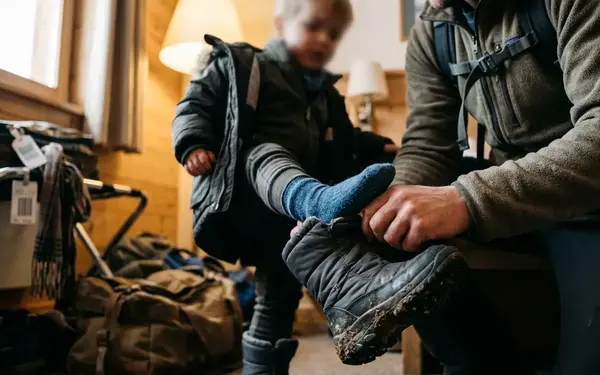
For family adventures, organize meals around the trail day: breakfast before departure, a packed lunch and a confirmed substantial supper afterward. Ask family-run accommodation about meals, check restaurant opening hours and treat a community-hall supper as an opportunity tied to its actual schedule. In francophone communities, a French greeting opens the conversation; confirm essential directions and safety instructions in a language everyone understands rather than assuming bilingual service everywhere.
Four Days From Edmundston Snowshoes to Chaleur Fat Biking
Build this circuit around the least flexible reservation: the guided sled outing. Confirm an operating provider, authorized upland winter access and a maintained coastal riding route before booking overnight stops. Keep total excursion duration separate from time actually handling a sled.
Day 1: Settle Into Edmundston
Book an Edmundston overnight and choose a mapped local river-valley snowshoe route for the afternoon. Download the map before leaving. Arrange ployes and cretons through a confirmed menu or accommodation meal, and pack the following day’s lunch.
Day 2: Meet the Sled Team
Drive to the confirmed Kedgwick-area departure point. Reserve the day for the operator’s programme, including dog introductions, safety briefing and trail time. Practise braking and leaning under the guide’s direction before wooded turns. Choose that night’s lodging around the actual finish location.
Day 3: Make Time for the Uplands
Use Route 17 to orient the Saint-Léonard–Saint-Quentin–Kedgwick corridor. Check winter-access information for Mount Carleton Provincial Park and road conditions through New Brunswick 511. The park approach involves Route 385; eastbound Route 180 does not itself establish park access. Give the chosen outing its own daylight window, then drive toward Bathurst with an overnight and supper arranged.
Day 4: Ride Beside Chaleur
On the final morning, a rider picking up a reserved fat bike in Bathurst at 9:00 a.m. can roll onto a groomed Chaleur trail with tire pressure set low for packed snow, cover a sheltered coastal loop, and return the bike before noon—leaving plenty of time for a bowl of hot seafood chowder downtown before turning south.

Write a Comment